
Aurigids Meteor Shower 2026: When & Where to See It in California
The Aurigids meteor shower 2026 will not put on the kind of show that fills up campground reservations, and that is worth knowing before anyone drives out to the desert or up into the Sierra for it. This is a quiet, minor shower, active from late August into early September, with a peak expected the night of August 31 into September 1. Under a dark sky, patient watchers might catch somewhere around 5 to 6 meteors per hour, and this year a bright waning gibbous Moon will wash out a good share of the fainter ones.
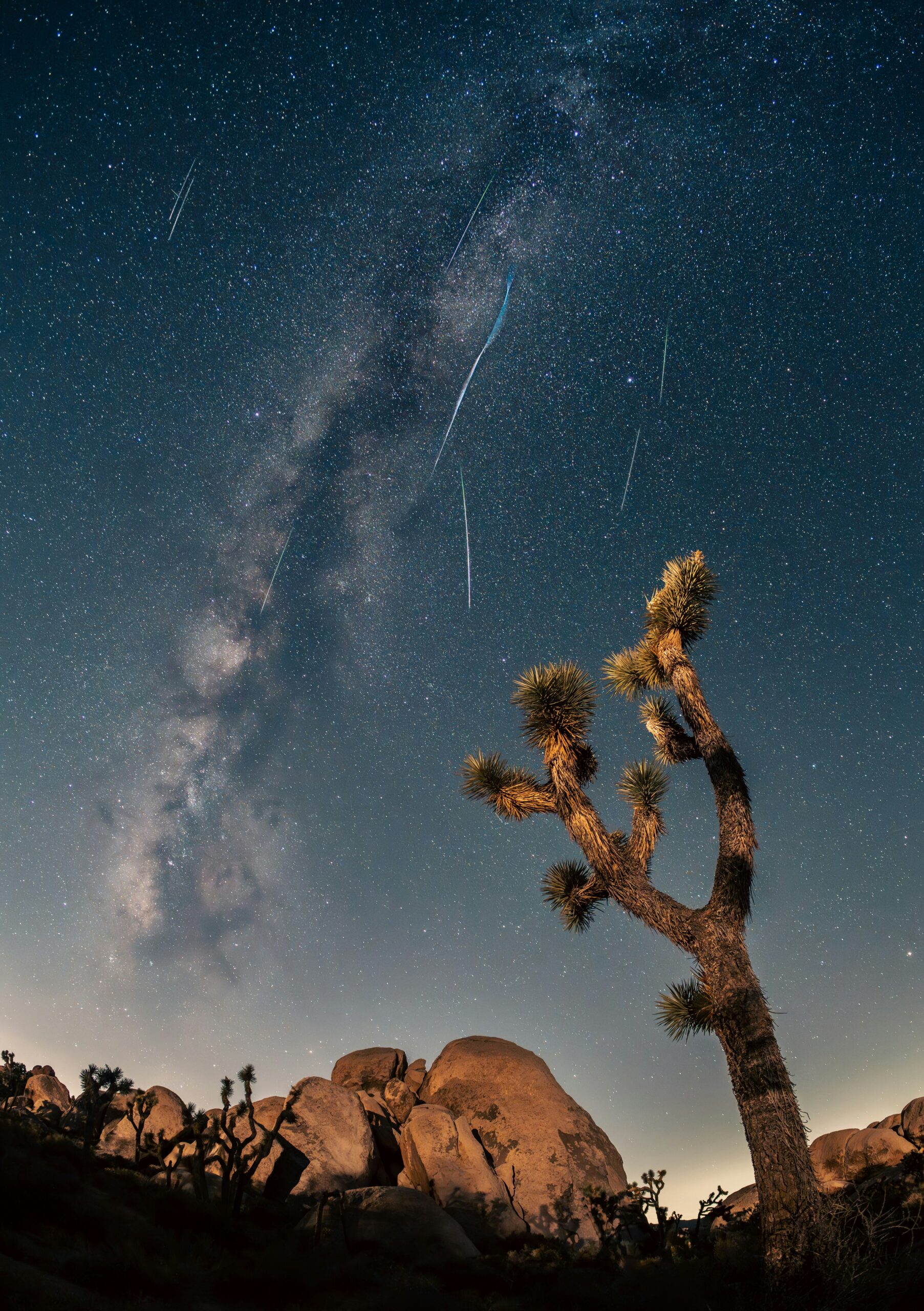
None of that means the night is a waste. California Backroads has spent years mapping out where the state's night sky still looks like a night sky, and the Aurigids give residents and road-trippers a good excuse to get out from under the streetlights for a few hours, even if the meteor count stays modest. A slow night with a thermos of coffee, a reclined chair, and the Milky Way overhead has its own reward, whether or not a fireball streaks past.
This guide breaks the Aurigids down by what actually matters for a California viewing plan: the timing, the realistic odds, the best regional dark-sky spots from the redwood coast to the Anza-Borrego badlands, and how the Moon will shape the experience this year. It also covers the comet behind the shower and how to tell an Aurigid from a stray Perseid straggler still drifting through late-summer skies.
Aurigids Meteor Shower 2026: When & Where to See It in California
When to Watch and What to Expect in 2026
The Aurigids run from August 28 through September 5, with the peak landing on the night of August 31 into September 1, 2026. Expect a modest shower this year, both because the Aurigids are naturally sparse and because a bright Moon will be in the sky for much of the peak night.
What Are the Aurigids Peak Dates and Best Viewing Hours?
The shower's active window stretches from August 28 to September 5, according to In-The-Sky.org and other trackers monitoring the 2026 return. The peak night falls between August 31 and September 1.
The best viewing hours come after the radiant, near the star Capella in the constellation Auriga, climbs well above the horizon. For most of California, that means late evening through the pre-dawn hours before twilight. The higher the radiant sits in the sky, the more meteors become visible, since fewer get cut off by the horizon.
How Many Meteors Can You Realistically See?
Expect roughly 5 to 6 meteors per hour under dark, moonless conditions, based on the shower's zenithal hourly rate (ZHR). ZHR is a theoretical number assuming a perfectly dark sky and the radiant directly overhead, so real counts run lower.
With this year's waning gibbous Moon in the sky for much of the night, actual counts will likely land toward the lower end, or below it. This is a shower for patient watchers, not a guaranteed light show. Compare that to the Perseid meteor shower, which can produce far higher rates under good conditions, and the difference in expectations becomes clear fast.
Where Is the Aurigids Radiant in Auriga?
The radiant sits in the constellation Auriga, close to the bright star Capella, which makes the radiant point easy to find even for first-time skywatchers. Auriga rises in the northeastern sky during the evening for Northern Hemisphere observers and climbs higher as the night goes on.
Meteors can appear anywhere in the sky, not just near the radiant, but tracing a streak backward toward Auriga confirms it as an Aurigid. Southern Hemisphere viewers see the radiant sit lower, or not rise at all, which is why this shower favors the Northern Hemisphere, including all of California.
Best Dark-Sky Places in California
California's geography offers no shortage of dark-sky options, from redwood-shadowed coastline to high desert basins with almost no light pollution. The right pick for the Aurigids depends on how far someone wants to drive and how much elevation and horizon clearance matter for catching a radiant that sits fairly high overhead.
Northern California Viewing Areas
Lassen Volcanic National Park and the high country around Lake Tahoe offer some of the darkest skies in Northern California, well away from Bay Area light domes. Elevation helps here, since thinner air and a higher horizon line make for crisper viewing once Auriga climbs overhead.
The Mendocino coast and inland stretches near the redwoods work too, though coastal fog and marine layer can roll in overnight, especially in early September. Checking a same-day forecast before driving out matters more on the coast than inland.
Central California and Sierra Viewing Areas
The Eastern Sierra along Highway 395 and the high-elevation stretches near Yosemite and Sequoia and Kings Canyon give some of the clearest, driest air in the state for late-summer stargazing. Thin, dry mountain air cuts down on atmospheric haze that can dull faint meteors.
Big Sur and the Central Coast offer dramatic scenery, but fog is a real factor overnight, particularly near the water. Inland valleys around Paso Robles, away from Highway 1's marine layer, tend to hold clearer skies for a longer stretch of the night.
Southern California Desert and Mountain Viewing Areas
Joshua Tree and Anza-Borrego Desert State Park rank among the best dark sky locations in Southern California, with wide-open horizons and minimal light pollution once away from the park roads. Desert nights in late August still run warm, which makes for comfortable long stretches outside.
Mountain communities like Idyllwild and Big Bear offer a cooler, higher-elevation alternative with darker skies than most coastal Southern California spots. Both sit close enough to Los Angeles and San Diego for a manageable overnight trip.
How Moonlight and Local Conditions Affect Visibility
The Moon will be the single biggest factor working against a strong Aurigids show in 2026. A waning gibbous Moon, only a few days past full, will be in the sky for much of the peak night, and its glare will erase all but the brighter meteors.
Why the Waning Gibbous Moon Will Limit Faint Meteors
The Aurigids peak arrives close enough after the Full Moon that most nights around August 31 to September 1 will carry a waning gibbous Moon of substantial illumination, based on 2026 lunar and meteor visibility tracking. That kind of moonlight brightens the whole sky, which drowns out the shower's typically faint streaks.
Some Aurigids do produce brighter meteors and occasional fireballs, and those will still cut through the glow. The fainter, more common meteors will likely stay invisible for most viewers this year.
How to Find a Darker Window and Protect Your Night Vision
Timing a viewing session around moonset, or positioning to block the Moon behind a ridge, tree line, or building, opens up a darker patch of sky worth watching. Checking a lunar calendar or an app like Sky Tonight or Star Walk 2 ahead of time shows exactly when the Moon rises, sets, and how much of it is illuminated on a given night.
Dark adaptation takes about 20 to 30 minutes, and even one glance at a phone screen resets it. Red-light flashlights and dimmed phone screens preserve night vision far better than white light.
What to Check Before Driving to a California Viewing Site
A same-day weather forecast is worth checking before any night drive, since coastal fog, high cloud, or smoke from wildfire activity can erase a clear night with little warning in late summer. Air quality reports matter too, particularly for desert and Sierra locations near active fire zones.
Confirming park hours, entrance reservations, and road conditions ahead of time avoids a wasted trip. For those combining the shower with a longer weekend, pairing it with a stargazing itinerary or a stay near one of California's best camping destinations turns one night into a fuller trip.
How to Watch the Shower and Why It Happens
Aurigid meteors form when Earth passes through a dust trail left by a long-period comet, and they streak into the atmosphere at roughly 66 km/s, fast enough to sometimes leave a short glowing trail called a persistent train. Most Aurigids show up as quick, bright streaks rather than long, slow-moving ones.
Where Should You Look for the Longest Meteor Trails?
Looking about 30 to 40 degrees away from the radiant, rather than straight at Auriga, tends to reveal longer meteor trails. Meteors near the radiant point appear short, almost like they're coming straight at the viewer, while ones farther away streak across more sky.
Lying back with a wide view of the sky, rather than fixating on one spot, catches more meteors overall. A reclining chair or a blanket on the ground works better than standing and craning the neck.
Do You Need Binoculars or a Telescope?
Naked-eye viewing works best for meteor showers, including the Aurigids, since meteors move too fast and cover too much sky for binoculars or a telescope to track. Both tools narrow the field of view dramatically, which cuts the odds of catching a streak.
Binoculars still have a place here, for scanning the Milky Way or picking out star clusters near Auriga during slow stretches between meteors. A telescope adds little value on a night built around meteor watching.
What Comet Kiess Has to Do With the Aurigids
Comet C/1911 N1 Kiess is the parent body of the Aurigids, a long-period comet with an orbit so wide it will not return to the inner solar system for roughly 2,000 years, according to reporting on the comet's dust trail tied to this shower. Earth crosses paths with the dust it shed on past visits, which produces the alpha Aurigids every year in late August and early September.
This puts the Aurigids in different company than showers with well-known, frequently returning parents. The Perseids come from comet 109P/Swift-Tuttle, the Orionids and Eta Aquariids both trace back to comet 1P/Halley, and the Geminids come from an asteroid rather than a comet at all. The Aurigids, by contrast, carry debris from a comet most people will never see again in their lifetimes, making each year's dust crossing a genuinely distant echo of a single, ancient pass through the solar system.