August 2026 Lunar Eclipse California: Best Viewing Spots & Times
California will get a front-row seat to a deep partial lunar eclipse on the night of August 27 into the early morning of August 28, 2026.
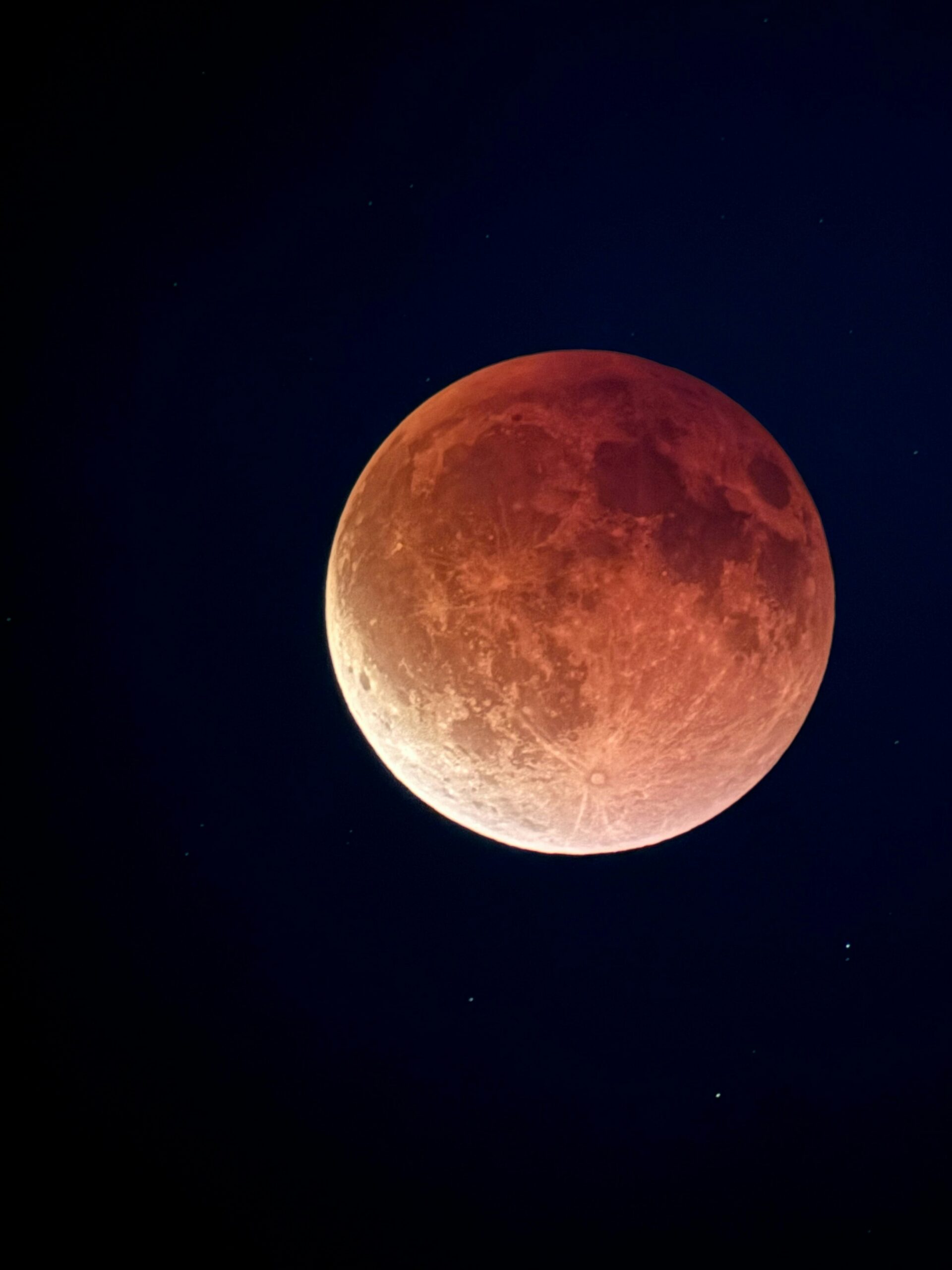
At its peak, roughly 96% of the Moon will fall within Earth's shadow, giving the lunar surface a dim, reddish glow without a full Blood Moon transformation.
This event ranks among the most striking sky-watching opportunities the state will see before 2028.
The August 2026 lunar eclipse follows closely behind the Sturgeon Moon, the traditional name for August's full moon.
It unfolds during favorable evening hours for West Coast viewers.
Unlike a total eclipse, this 2026 partial lunar eclipse will leave a thin sliver of the Moon outside Earth's umbra, creating a dramatic contrast between shadow and light.
Anyone in California wondering when and where to watch should know that clear skies and an unobstructed view of the horizon will matter most.
The sections ahead break down exact viewing windows across the state's time zones, along with the best spots to catch this rare lunar event.
August 2026 Lunar Eclipse California: Best Viewing Spots & Times
California Eclipse Times and What You Will See
The August 2026 lunar eclipse California will unfold in stages over several hours, with the Moon passing through Earth's penumbra before entering the deeper umbral shadow.
California viewers will not see a total eclipse, but the umbral magnitude will be high enough to produce a noticeably darkened and reddened lunar surface during the peak.
Pacific Time Schedule for August 27–28
The eclipse begins with the penumbral phase, which is subtle and often hard to detect with the naked eye.
According to timeanddate's California eclipse data, the penumbral phase starts at 7:00 p.m. MST, which converts to roughly 6:00 p.m. Pacific time on August 27.
The partial phase, when the Moon visibly enters Earth's umbra, begins at 8:12 p.m. PDT.
It continues until 10:13 p.m. PDT, followed by the end of the penumbral phase just after midnight.
| Phase | Pacific Time |
|---|---|
| Penumbral begins | ~6:00 p.m. |
| Partial begins | 8:12 p.m. |
| Partial ends | 10:13 p.m. |
| Penumbral ends | ~11:01 p.m. |
These times are approximate and based on universal time conversions.
Minor variations may appear across different sources.
The Deep Partial Phase and Maximum Eclipse
Maximum eclipse, also called greatest eclipse, occurs when the Moon reaches its deepest point inside Earth's umbral shadow.
In San Francisco, this moment arrives around 9:12 p.m., with a magnitude of 0.930.
This figure means roughly 93% of the lunar disk will sit within Earth's umbra at peak, while other calculations cited by Space.com's eclipse guide put coverage closer to 96%.
Either way, this qualifies as a deep partial lunar eclipse.
During this window, the shadowed portion of the Moon will likely take on a reddish or copper tone.
The small sliver remaining outside the umbra will stay bright by comparison, creating a visible contrast across the lunar surface.
Why This Is Not a Total Blood Moon
A true blood moon eclipse occurs when the entire lunar disk sits inside Earth's umbra, allowing sunlight refracted through the atmosphere to color the whole surface red.
That does not happen here.
Because only about 93 to 96 percent of the Moon passes into the umbra, a thin edge remains illuminated by direct sunlight throughout maximum eclipse.
NASA's eclipse page describes this event as a “deep partial lunar eclipse” rather than a total one.
The penumbral magnitude will exceed 1.0, meaning the entire Moon passes through the outer penumbra, but umbral coverage stops just short of totality.
Viewers should expect dramatic shadowing and color shift, not a uniform, all-red lunar disk.
Where to Watch From California
Since the eclipse begins low in the eastern sky as the Moon rises on the evening of August 27, an unobstructed view toward the east matters more than any specific city or region.
Location within California affects timing only slightly, but terrain and horizon visibility make a significant difference in what observers actually see.
Los Angeles and Southern California
Los Angeles offers a practical vantage point for the eclipse, though the exact timing shifts depending on local moonrise.
According to detailed eclipse timing for Los Angeles, the Moon rises already partially in shadow, so residents need a clear eastern horizon free of buildings, hills, or the coastal marine layer that sometimes lingers over the region.
Griffith Observatory has organized a public event for the occasion.
Their program, described as a partial practically total lunar eclipse viewing, gives Angelenos an elevated, open-sky location away from downtown light pollution.
Beach communities along the Pacific Ocean, such as Santa Monica or Malibu, work well too, provided viewers face inland toward the eastern hills rather than out to sea.
Inland valleys like the San Fernando or San Gabriel Valley also offer decent sightlines if smog and haze stay low that evening.
Northern California and the Bay Area
Sacramento and the greater Bay Area will see the eclipse at a similar point in its progression as Southern California, since the entire state falls within one time zone.
A Sacramento-focused viewing guide notes that the Moon rises already dimmed by Earth's shadow, so timing the moonrise precisely matters for anyone hoping to catch the full sequence.
The Bay Area's hilly terrain can complicate viewing.
Locations east of the bay, including the Berkeley and Oakland hills, tend to offer better eastern exposure than spots directly along the immediate shoreline, where coastal fog is common in late August.
Open parks, hilltops, and elevated public spaces away from city centers give the best combination of low light pollution and unobstructed eastern sky access throughout Northern California.
Clear Eastern Horizons on the Coast and Inland
Coastal cities face a specific challenge: the Pacific Ocean lies to the west, meaning the eclipse itself will not be visible over open water.
Instead, viewers along the coast need to turn inland and look toward hills, foothills, or open desert plains to the east.
Inland desert regions, including areas near Palm Springs or the Mojave, often provide the clearest and driest air, minimizing atmospheric distortion near the horizon.
Flat agricultural areas in the Central Valley also work well, assuming no low fog has settled in in the evening.
| Location Type | Viewing Advantage |
|---|---|
| Coastal cities | Clear skies, but must face inland |
| Inland valleys | Reduced humidity, less coastal fog |
| Elevated parks/hills | Unobstructed eastern horizon |
| Desert regions | Driest air, minimal haze |
Moonrise Viewing Considerations
Because the eclipse is already underway at moonrise across California, timing is critical.
Observers should arrive at their chosen spot at least 20 to 30 minutes early to locate the Moon low on the horizon before it climbs into clearer view.
This eclipse is visible across a wide swath of North America, western Canada, and Hawaii, though the exact stage seen at moonrise varies by longitude.
For those unable to find a clear horizon, a live eclipse animation and stage-by-stage breakdown offers a useful reference for what to expect at each point in the event, regardless of location within the United States.
How to Prepare and Photograph the Eclipse
No special equipment is required to watch the eclipse, but binoculars, a small telescope, and a basic camera setup can reveal far more detail than the naked eye alone.
Timing, location, and sky conditions all affect what observers in California will actually see once the Moon moves into Earth's shadow.
Safe Viewing With Your Eyes or Optics
A lunar eclipse poses no risk to the eyes, unlike a solar eclipse.
Eclipse glasses are unnecessary for this event, since the Moon only reflects sunlight rather than emitting it directly.
Observers can look at the Moon throughout every stage of the eclipse without any protective gear.
This makes lunar eclipses far more accessible than solar eclipses for casual skywatchers.
Anyone can step outside, find a spot with a clear view of the sky, and watch the shadow move across the lunar surface.
No filters, glasses, or special preparation are needed beyond checking the exact viewing times for the eclipse.
Using Binoculars and a Small Telescope
Binoculars sharpen the view of the umbra's edge as it creeps across the full moon phase.
A pair with 7x to 10x magnification is enough to show texture and shading that the naked eye misses.
A small telescope offers even more detail, including the ability to track individual craters as the shadow passes over them.
Higher magnification also makes the reddish coloring during peak eclipse easier to appreciate.
Tripods or a stable mount help reduce shaking at higher zoom levels.
Observers using a telescope should allow a few minutes for their eyes to adjust to the dimmer light before trying to spot fine surface detail.
How to Photograph a Lunar Eclipse
Photographing a lunar eclipse requires a steady camera, a zoom or telephoto lens, and manual exposure settings.
A tripod is essential, since even small movements blur detail at long focal lengths.
Recommended starting settings include:
- ISO: 200–800, adjusted as the Moon darkens
- Aperture: f/8 to f/11 during the bright penumbral phase, opening wider as totality approaches
- Shutter speed: 1/125 to 1/250 during early stages, slowing to 1–2 seconds at maximum eclipse
- Focus: Manual, set to infinity and fine-tuned using live view
A remote shutter release or camera timer helps avoid vibration from pressing the shutter button.
Photographers should adjust settings gradually as the sky darkens and the Moon's brightness changes throughout the event.
Weather, Sky Conditions, and Eclipse Color
Clear skies are the biggest factor in successful viewing.
Coastal areas of California sometimes experience marine layer clouds in the evening, so inland or elevated locations often provide better odds of an unobstructed view.
The Moon's color during totality depends partly on atmospheric dust and particulate matter in Earth's atmosphere.
Volcanic activity or wildfire smoke can shift the shade toward darker red or brown, while cleaner air produces brighter orange or copper tones.
Astronomers use the Danjon scale to rate eclipse brightness, ranging from 0 (very dark, nearly invisible Moon) to 4 (bright orange or copper-red).
Conditions leading up to the event will determine where this eclipse falls on that scale.
Eclipse Science, Visibility, and Reliable Forecasts
Lunar eclipses follow predictable orbital mechanics tied to the moon's position relative to Earth's shadow.
This event will be visible far beyond California's borders.
Accurate timing and visibility data come from a small number of trusted astronomical sources.
Why Lunar Eclipses Occur During Eclipse Season
A lunar eclipse only happens during an eclipse season, a roughly 34-day window that occurs twice a year when the moon's orbit crosses Earth's orbital plane near a lunar node.
The moon's orbit is tilted about five degrees relative to Earth's path around the sun, so alignment only happens when a full moon coincides with the moon passing through its ascending node or descending node.
This particular event belongs to Saros 138, a numbered series of eclipses that repeat roughly every 18 years, 11 days.
Eclipse seasons also produce solar eclipses.
A total solar eclipse can occur roughly two weeks before or after a lunar eclipse, since both depend on the same node crossing.
Global Visibility Beyond California
This eclipse is not exclusive to California or even North America.
It will reach an estimated 3.3 billion people across multiple continents.
Visibility extends across:
- The Americas (North and South America)
- Europe
- Africa
- Parts of the Antarctica region
- Limited areas near the Indian Ocean
Regions such as Australia, Japan, China, and India will largely miss this event, as it occurs during their daytime hours.
The Middle East will see only a partial view, if any, depending on local moonrise timing.
California observers are well-positioned, since the eclipse unfolds during evening hours on the West Coast rather than after moonset.
Checking Local Predictions and the Next Lunar Eclipse
Reliable eclipse data requires consulting established astronomical references rather than casual estimates.
EclipseWise, maintained using calculations originally developed by astrophysicist Fred Espenak, provides precise timing tables for each eclipse phase.
Timeanddate.com offers localized visibility maps and countdown tools specific to a viewer's city.
For California residents, cross-referencing both sites confirms exact start and peak times adjusted for Pacific Daylight Time.
Looking ahead, the next lunar eclipse will be a penumbral lunar eclipse, a subtler event where the moon dims only slightly.
A total lunar eclipse, producing a fully red “blood moon,” is not expected again until a later date confirmed through these same prediction tools.